
Why I Still Play Scales
Quiet Workouts for the Hands and Mind

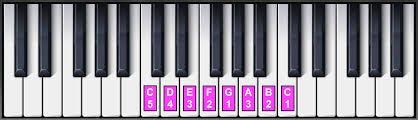
Scales aren’t glamorous.
They don’t get applause. No one requests them at the end of a concert. They can feel repetitive, predictable, even slightly dutiful.
And if we’re talking purely about physical development, they’re not necessarily the most intensive workout for the hands. Five-finger exercises - like those by Oscar Beringer - can be far more concentrated and demanding. Scales don’t actually give the weaker fourth and fifth fingers that much isolated work - if you think about it, in a four octave scale you only use finger 5 once!
And yet - I still come back to them.
Because while they might not be the ultimate gym session for the fingers, they carry a different kind of value. My own piano teacher used to say there were hundreds of benefits to practising scales. I’m not sure I’ve discovered all of them yet - but here are seven good ones to get started with.
1. Finger strength
There’s a particular kind of strength that scales build. Not force - not volume - but supported tone. When you play evenly and with attention, the fingers learn how to transfer weight into the key bed efficiently.
That strength is what allows a soft dynamic to still feel grounded. It’s what keeps a pianissimo from sounding apologetic. In softer, more intimate playing especially, that underlying support makes all the difference.
2. Finger independence
Scales are one of the simplest ways to teach the fingers to operate without clinging to one another.
Over time, each finger begins to take responsibility for its own movement. That independence shows up at some point in the future, when you’re voicing a melody above an accompaniment, shaping inner harmonies, or keeping one line steady while another moves freely. It’s subtle work - but it has the effect of clarifying everything.
3. Speed
When scales are practised carefully, they teach economy of movement - relaxed thumb turns, small wrist adjustments, efficient fingering. When that efficiency is in place, tempo can increase without tension creeping in. When pianists mention ‘quiet hands,’ they’re not simply talking about playing softly - it’s about that economy of movement, letting every motion count, and removing anything extraneous.
Even if you never need virtuoso velocity, that feeling of ease transforms expressive playing. Nothing feels rushed or frenetic.
4. Accuracy
There’s nowhere to hide in a simple ascending and descending pattern. They expose unevenness (in timing and tone), hesitations, lapses in focus. But in doing so, they also build reliability.
When your hands truly know the geography of every key, leaps feel less hazardous and passagework becomes less of a lottery.
5. Memory
Scales are patterns - and music is built from patterns.
When you practise them consistently, your hands begin to recognise shapes instinctively. A fast run in a piece stops feeling like a blur of notes and instead becomes “just a fragment of E major” or “a descending minor scale”.
Memory becomes structural and about groups of notes rather than having to consider every single individual note and this is part of the key to unlocking fluency and progressing to higher levels.
6. Sight-reading
So much sight-reading anxiety comes from unfamiliar keys.
If B major or E flat minor already feel physically comfortable, the page stops being a puzzle and starts becoming something more fluid. You’re no longer decoding note by note - you’re recognising shapes and gestures.
Scales build that quiet familiarity that makes reading feel less like deciphering and more like flowing.
7. Stamina
For anyone who performs, stamina matters more than we admit.
Scales develop endurance gently. They train the hands to sustain movement without tightening, to keep tone consistent even as repetition sets in.
In longer performances - when you’re deep into a programme and still want the final piece to have the same care as the first - that resilience is really valuable.
Scales won’t ever be the most exciting part of sitting at the piano.
But they are grounding and can be meditative.
They’re a way of returning to basics before expression. A reminder that freedom at the keyboard rests on something secure and steady underneath.
Do you play scales regularly? How do you fit them into your practice: first thing, last thing, or sprinkled throughout?
Do you enjoy practising scales, or do you see them as just a necessary chore? I’d love to hear from you.
Steve
Loved reading this little piece. I know a little how important scales are to musicians, but this piece really opened my mind to its many benefits. Cheers!